Drone Exterior Cleaning in New Jersey
Why Drone Exterior Cleaning Is the Smartest Choice for Commercial Buildings in New Jersey
New Jersey’s commercial real estate portfolio is diverse and demanding. From Jersey City’s waterfront high-rises to Newark’s mixed-use developments, from Hoboken’s dense urban buildings to suburban office parks in King of Prussia, New Jersey property managers oversee buildings that face unique environmental and operational challenges. Salt air from the Atlantic, freeze-thaw cycles in winter, industrial pollution, and complex urban density create constant exterior maintenance demands.
Traditional cleaning methods—scaffolding, lifts, and water-fed poles—are expensive, disruptive, and inefficient for NJ’s specific building types. A smarter solution is transforming how New Jersey maintains its commercial properties: drone exterior cleaning.
Exterior Cleaning Challenges Across New Jersey
New Jersey’s buildings experience a range of environmental pressures that demand frequent, aggressive exterior maintenance.
Coastal Salt Air Corrosion
Properties in Jersey City, Hoboken, and coastal areas experience accelerated corrosion from Atlantic salt air. Window frames, metal trim, facade materials, and architectural features deteriorate faster than inland properties. Regular cleaning prevents long-term material damage and maintains building integrity.
Freeze-Thaw Cycles and Winter Damage
New Jersey winters create aggressive conditions: salt spray from road de-icing, ice accumulation on ledges, and repeated freeze-thaw cycles that damage protective coatings and sealants. Buildings require frequent cleaning to prevent accelerated deterioration.
Industrial Pollution Buildup
Many NJ commercial areas have legacy industrial activity. Pollutants settle on facades, windows, and roofs, creating stubborn buildup that requires specialized cleaning and regular maintenance.
Diverse Building Types and Access Complexity
New Jersey’s commercial portfolio includes high-rises, mid-rise apartments, office parks, retail centers, warehouses, and mixed-use developments. Each building type presents unique access and operational constraints that complicate traditional cleaning methods.
Stringent Local Regulations
Many NJ municipalities have strict rules about street permits, sidewalk closures, and lane restrictions. Cleaning projects involving ground equipment require extensive permitting and coordination, adding cost and timeline delays.
Why Traditional Lifts and Scaffolding Fall Short in New Jersey
New Jersey’s traditional cleaning approaches—scaffolding, lifts, and water-fed poles—all struggle with the state’s building diversity and operational requirements.

Scaffolding is Expensive and Slow
Renting and installing scaffolding for a Jersey City high-rise or Newark mixed-use building costs $20,000–$50,000, depending on height and duration. Setup takes days, removal takes more days. The project stretches across weeks. During that time, sidewalks are partially closed, street permits are required, building operations are disrupted, and tenants experience restricted access.

Lifts Require Permits and Create Traffic Disruption
Deploying a boom lift in urban Jersey City, Hoboken, or downtown Newark requires street permits, traffic coordination, and municipal approvals. This adds weeks to project timelines and thousands in administrative costs. In high-traffic areas, the public disruption is significant.

Water-Fed Poles Have Serious Limitations
Water-fed pole systems work for buildings under 60 feet, but can’t reach upper floors of NJ’s taller buildings. They require continuous water supply, create runoff concerns, and are labor-intensive for large-scale projects.

All Traditional Methods Disrupt Property Operations
Scaffolding, lifts, and poles all create building disruption: restricted tenant access, noise, vibrations, and operational delays. For commercial properties with full occupancy, this disruption impacts business continuity and tenant satisfaction.
How Drone Cleaning Outperforms Scaffolding in New Jersey
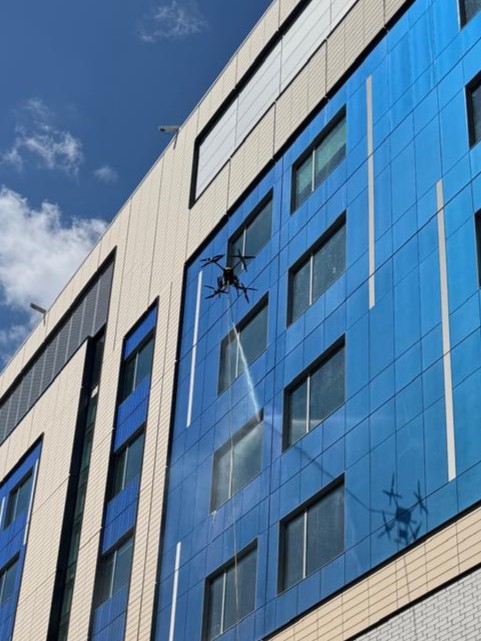
Drone exterior cleaning eliminates these limitations entirely. Drones can clean New Jersey’s most challenging buildings—from high-rises to complex mixed-use properties—quickly, safely, and cost-effectively.

Speed and Operational Efficiency
A drone can clean a 30-story Jersey City building or large warehouse facility in 1–2 days, compared to 3–5 weeks with scaffolding. Property managers complete projects on their schedule without disrupting tenants, businesses, or building operations.

Zero Sidewalk or Street Disruption
Drones operate entirely in the air. No ground equipment. No sidewalk closures. No street permits required. Traffic flows normally. Retail locations don’t lose foot traffic. Building operations continue uninterrupted. Adjacent properties aren’t affected.

Superior Safety Profile
Drones eliminate worker exposure to high-altitude hazards. Professional drone exterior cleaning providers like AltitudeWash operate under FAA Part 107 certification and strict operational protocols designed for dense urban environments. Building occupants, pedestrians, and workers all remain fully protected. Drone exterior cleaning aligns with OSHA’s emphasis on reducing worker exposure to high-altitude hazards. Insurance carriers increasingly recognize drones as lower-risk, reducing liability and workers’ compensation costs.

Precision and Flexibility
New Jersey’s building diversity—apartments, office parks, warehouses, retail centers, mixed-use properties—requires flexible cleaning approaches. Drones adapt to each building type, accessing roof corners, architectural ledges, solar panels, and complex facades that lifts and scaffolding can’t efficiently reach.
Substantial Cost Savings
Without equipment rental, city permits, street coordination, or extended timelines, drone cleaning costs 40–60% less than traditional scaffolding approaches. For NJ property managers budgeting annual maintenance, this savings is substantial.
Applications: Windows, Facades, Roofs, and Solar Panels
Drone exterior cleaning allows property managers to consolidate multiple maintenance needs into a single operation:
This versatility makes drones a comprehensive solution for New Jersey’s diverse commercial property portfolio.
Why New Jersey Property Managers Choose Drone Exterior Cleaning
New Jersey’s leading property management companies, building owners, and commercial real estate firms have already adopted drone cleaning. The reasons are consistent:
Massive Cost Savings
Property managers see immediate financial benefits. Without scaffolding rental, permits, street coordination, and extended timelines, total project costs drop significantly. Annual maintenance budgets stretch further, allowing more frequent cleaning without budget increases.
Eliminates Operational Disruption
For apartment buildings, office parks, and retail properties, operational continuity is critical. Drone cleaning eliminates the disruption that scaffolding creates—no sidewalk closures, no tenant complaints, no lost business.
Reduced Liability and Insurance Costs
Insurance carriers recognize drone cleaning as lower-risk. Building owners reduce workers’ compensation exposure and liability claims. This translates to lower insurance premiums and reduced risk exposure.
Compliance with Safety Standards
Drone exterior cleaning aligns with modern safety standards and best practices. Forward-thinking property managers adopt the technology to demonstrate commitment to safety and operational excellence.
Maintains Building Reputation and Value
In New Jersey’s competitive commercial real estate market, building appearance matters. Clean, well-maintained facades support property values and attract quality tenants. Drone cleaning enables consistent, frequent maintenance that keeps buildings looking premium.
FAQs About Drone Exterior Cleaning in New Jersey
Is drone exterior cleaning allowed in New Jersey?
Yes. Drone exterior cleaning is fully legal in New Jersey when performed by FAA Part 107 certified operators following all federal and state regulations. Professional drone services like AltitudeWash maintain proper insurance, licensing, and operational protocols required by the FAA and NJ municipalities.
Do NJ drone cleaning projects require sidewalk permits?
No. Unlike scaffolding, lifts, or ground-based equipment, drone cleaning operations don’t require sidewalk permits or street closures. Drones operate entirely in the air, so no municipal permits for street use are needed. This is one of drone cleaning’s biggest advantages in densely regulated NJ cities.
What types of buildings can be cleaned with drones?
Drones can clean virtually any building type: high-rise office towers, residential apartments, mixed-use developments, warehouses, retail centers, office parks, industrial facilities, and more. Drones excel at cleaning windows, facades, roofs, solar panels, and architectural features on buildings of any height or complexity. The versatility makes drone cleaning suitable for New Jersey’s diverse commercial property portfolio.
Get a Quote for Drone Exterior Cleaning in New Jersey
New Jersey property managers don’t have to choose between clean buildings and operational disruption. Drone exterior cleaning delivers superior results faster and cheaper than traditional methods.
Whether your building is in Jersey City, Hoboken, Newark, Fort Lee, Paramus, Elizabeth, Paterson, Edison, or anywhere across New Jersey, drone cleaning adapts to your needs and schedule. No sidewalk closures. No extended timelines. No safety risks. Just clean, well-maintained buildings that keep tenants satisfied and protect your investment.
Ready to experience the efficiency and cost savings of drone exterior cleaning?
Contact AltitudeWash today for a free assessment and quote. Our FAA-certified operators specialize in New Jersey’s diverse building types, complex urban environments, and strict regulatory landscape.
Let’s get your building looking its best—safely, quickly, and affordably.